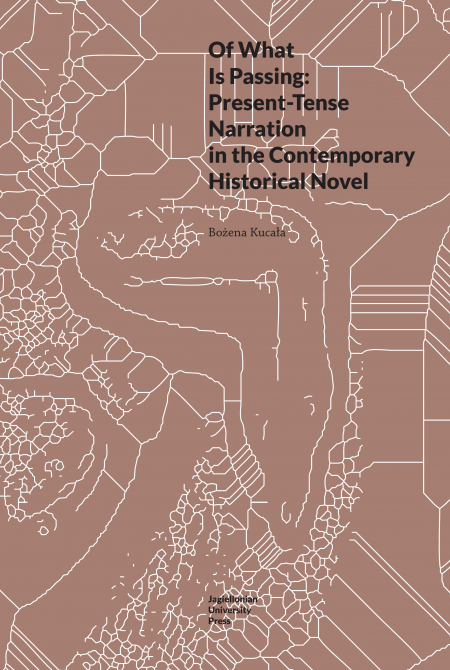
Of What Is Passing: Present-Tense Narration in the Contemporary Historical Novel
Seria: Topografie (po)nowoczesności
Liczba stron: 278
Format: 15,8x23,5 cm
Rok wydania: 2023
Data premiery: 30.11.2023
Opis książki
Of What Is Passing: Present-Tense Narration in the Contemporary Historical Novel explores a type of fiction that is illustrative of two current trends: on the one hand, the increasing popularity of the present tense as a narrative tense, and, on the other hand, the evolution of historical fiction at the turn of the twenty-first century.
This book is a pioneering study of contemporary historical novels in which events and the narration of them appear contemporaneous. It is argued that, far from being a mere substitute for the customary past tense, the present tense as a narrative tense entails a range of narrative devices that contribute to the effect of imaginatively reconstructing the past as if it were still the unfolding present.
The theoretical overview of time and tense in narrative is followed by detailed analyses of selected historical novels, illustrative of a variety of strategies consequent upon the choice of the present tense as the tense of narration. An underlying claim made throughout the book is that present-tense historical fiction typifies a new dimension of the genre which has recently attempted to navigate a way between traditional mimeticism and modern self-reflexivity.
This book is a pioneering study of contemporary historical novels in which events and the narration of them appear contemporaneous. It is argued that, far from being a mere substitute for the customary past tense, the present tense as a narrative tense entails a range of narrative devices that contribute to the effect of imaginatively reconstructing the past as if it were still the unfolding present.
The theoretical overview of time and tense in narrative is followed by detailed analyses of selected historical novels, illustrative of a variety of strategies consequent upon the choice of the present tense as the tense of narration. An underlying claim made throughout the book is that present-tense historical fiction typifies a new dimension of the genre which has recently attempted to navigate a way between traditional mimeticism and modern self-reflexivity.
O Autorce
Bożena Kucała is an Assistant Professor in the Department of Comparative Studies in Literature and Culture at the Institute of English Studies, Jagiellonian University in Kraków, where she teaches nineteenth-century and contemporary English literature. Her research interests include contemporary English fiction, especially the historical novel and neo-Victorian fiction. She is the author of Intertextual Dialogue with the Victorian Past in the Contemporary Novel (2012) and coeditor of James Joyce and After: Writer and Time (2010), Confronting the Burden of History: Literary Representations of the Past (2012), The Art of Literature, Art in Literature (2014), Travelling Texts: J.M. Coetzee and Other Writers (2014) and Powieść brytyjska w XXI wieku [The British Novel in the 21st Century] (2018).

ISBN: 978-83-233-5271-6
e-ISBN (pdf): 978-83-233-7476-3
e-ISBN (mobi,epub): 978-83-233-7477-0
Kraj pochodzenia producenta: Polska
POLECANE KSIĄŻKI
75,00
zł
60,00
zł


NOWOŚCI




Uwarunkowania ochrony dziedzictwa kulturowego – celuloidowego, prawnego, architektonicznego, muzealnego
( Oprawa miękka )
54,60
zł
43,68
zł



58,80
zł
47,04
zł

Of What Is Passing: Present-Tense Narration in the Contemporary Historical Novel
Wybierz rozdziały:
Wartość zamówienia:
0.00 zł
